

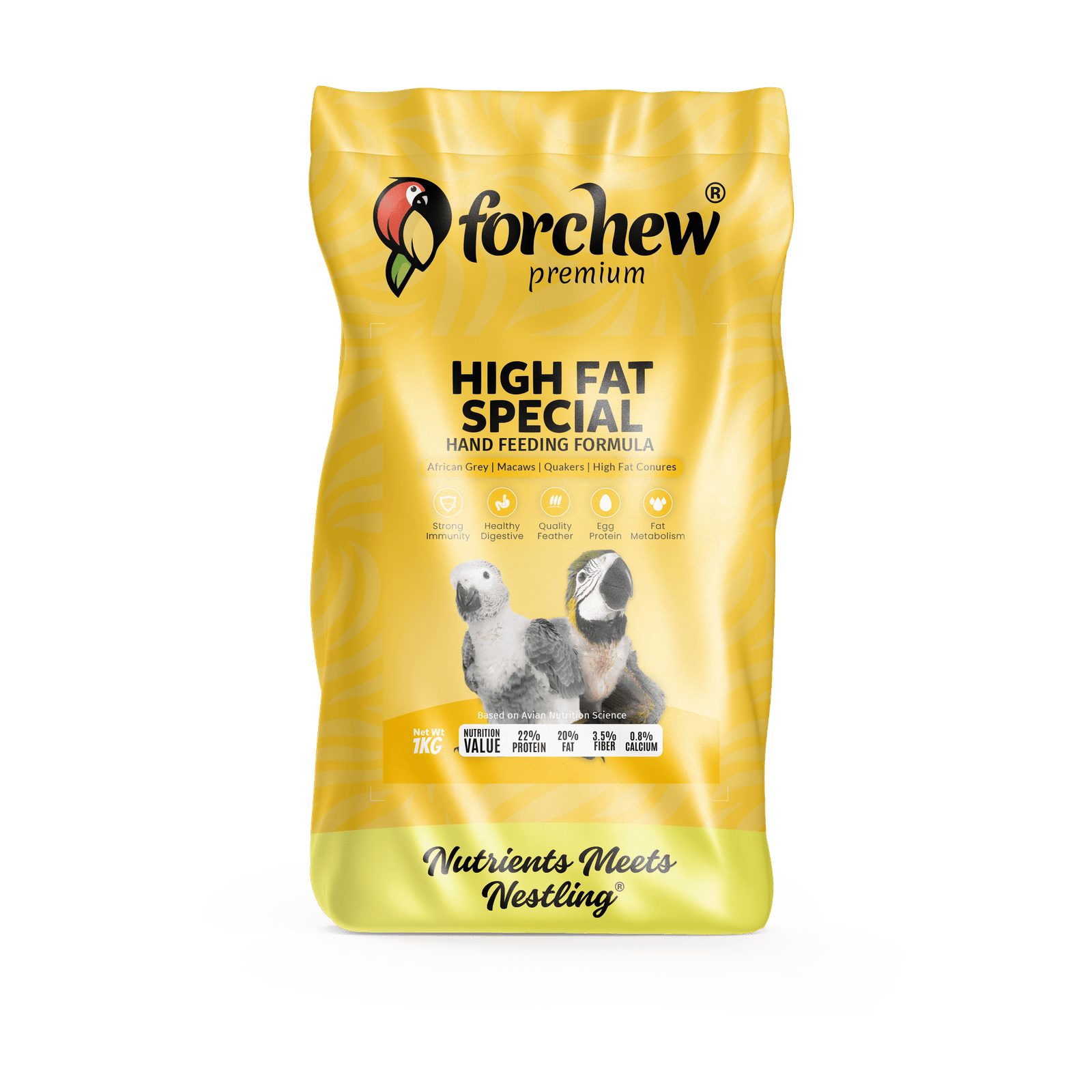

High Fat Hand Feeding Formula for Parrot Chicks
Give your growing nestlings the rich, high-energy nutrition they need with Forchew Premium High Fat Special Hand Feeding Formula. Specially developed according to avian nutrition science, this high fat hand feeding formula delivers maximum energy density, ideal body weight gain, vibrant feather development, and robust crop health for chicks requiring elevated lipid diets.
Key Benefits & Nutritional Support
- High-Energy Lipid Blend: Enriched with 20% fat to sustain high-metabolism chick species during rapid growth phases.
- Optimal Muscle Support: Packed with 22% protein to support strong muscular, skeletal, and feather structure.
- Enhanced Crop Motility: Active digestive enzymes ensure smooth crop transit and rapid nutrient absorption without slow-crop issues.
- Feather & Immune Boost: Formulated with egg protein, essential amino acids, and vital vitamins to promote rich, bright plumage and natural immunity.
Why Choose Forchew High Fat Hand Feeding Formula?
Certain parrot species, particularly those native to tropical regions, naturally consume diets higher in fats and lipids during their nestling phase. Feeding an inadequate energy profile can lead to delayed weaning, poor weight gain, and lower chick vitality. Forchew special high-fat formulation uses micro-pulverized grains for smooth mixing, optimal viscosity, and easy digestion.
Suitable Bird Species
This high fat hand feeding formula is specifically tailored for species requiring higher caloric and fat intake:
- African Grey Parrots (Congo and Timneh)
- Macaws (Blue & Gold, Green-winged, Scarlet, Hahn’s)
- Quaker Parrots / Monk Parakeets
- High-fat Conure species (Sun Conures, Jenday Conures)
- Other medium-to-large parrot nestlings with high energy demands
Guaranteed Nutritional Analysis
- Crude Fat (min): 20.0%
- Crude Protein (min): 22.0%
- Crude Fiber (max): 3.5%
- Calcium (min): 0.8%
- Phosphorus (min): 0.6%
Step-by-Step Feeding & Preparation Guidelines
- Sanitation: Always sterilize feeding syringes, spoons, and mixing containers before every meal to prevent bacterial infection in young chicks.
- Water Temperature: Boil clean water and allow it to cool to approximately 39°C–41°C (102°F–105°F). Never use lukewarm or boiling water, as cold water can cause crop stasis and hot water can burn the chick’s crop.
- Mixing Ratio: Gradually add the hand feeding powder to warm water while stirring continuously to prevent clumping. Mix until the formula reaches a smooth, creamy consistency.
- Feeding Technique: Feed carefully using a syringe or crop needle appropriate for the species size. Explore our full catalog of hand feeding tools and feeds for nursery care.
- Freshness Guarantee: Mix a fresh batch for every single feeding session. Discard any unused mixed formula immediately—never reheat or reuse leftover prepared formula.
Feeding Frequency & Portion Recommendations
Adjust feeding schedules according to the age and crop capacity of the chick:
- Day 1 – Day 5: Feed every 2 to 3 hours with a thinner, liquid-consistency mixture.
- Day 6 – Day 14: Feed every 3 to 4 hours as the chick starts growing down feathers.
- Day 15 to Weaning: Feed 3 to 4 times daily with a thicker mixture until the chick begins experimenting with solid weaning food.
Crop Care & Clinical Guidance
Monitoring crop motility is vital for chick survival. Always ensure the crop empties completely at least once every 24 hours, typically overnight. If crop emptying slows down, verify that feeding temperatures are correct and that the formula is mixed fresh. For detailed clinical background on avian pediatric nutrition and crop care, consult The Association of Avian Veterinarians guidelines.
Storage & Preservation
Store the container in a cool, dry area away from direct light and heat sources. Keep the seal airtight to preserve active digestive enzymes and essential vitamins.
Reviews
There are no reviews yet.